
On Sumba’s southwest coast, Ngalung Kalla approaches hospitality through Earth Care, People Care and Fair Share. This small, family-owned retreat connects handcrafted accommodation, a food forest and local livelihoods into one living system. Its reported 2025 figures show how permaculture can become an operating model, not simply a garden beside a hotel.
Build with the land, not over it
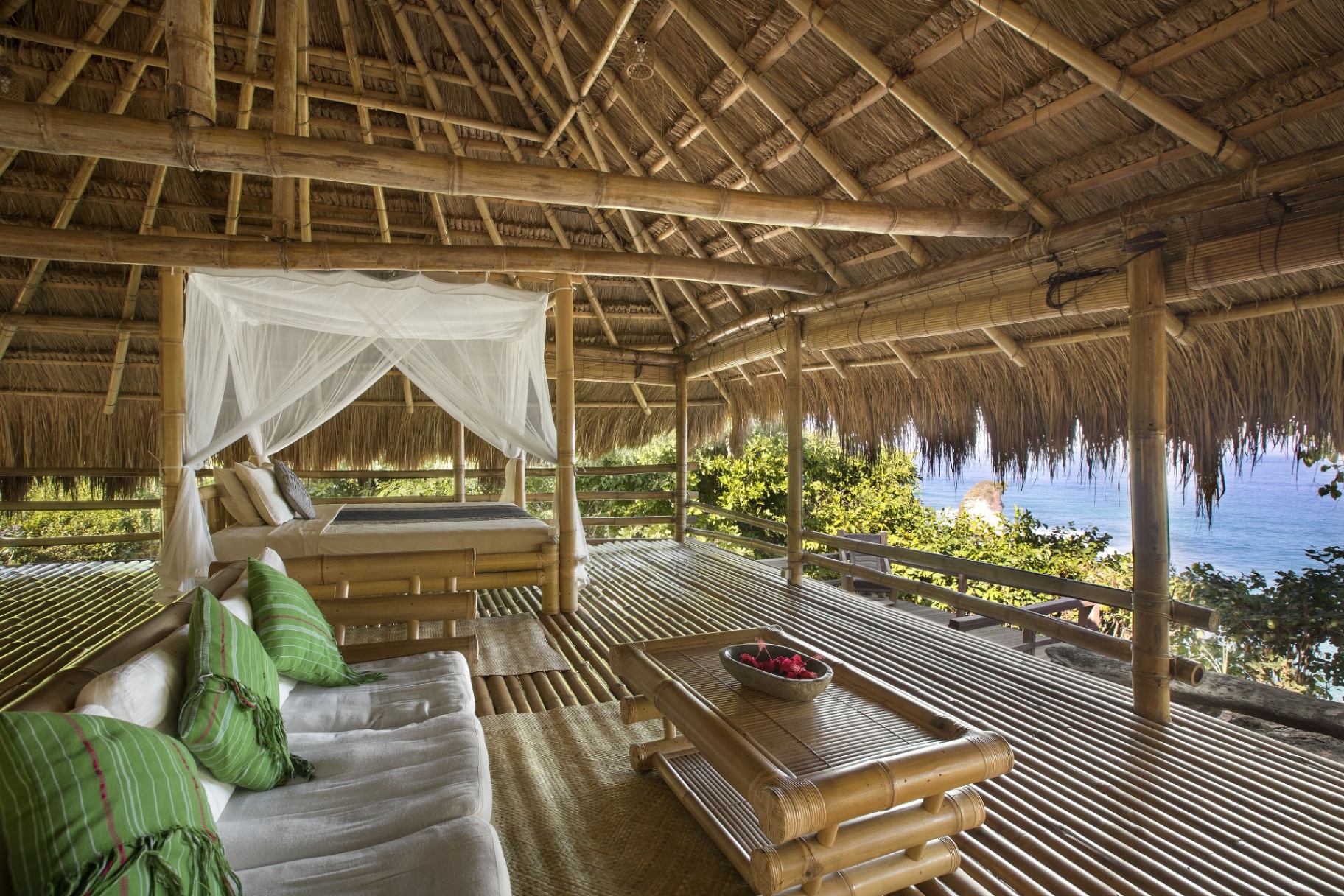
Before building, founders Christian and Ka’ale pitched tents and lived on the land, learning its contours and the ways local people used it. Seven handcrafted bungalows, an open-air restaurant, a yoga shala and an infinity pool grew slowly from that understanding. Bungalow materials are sourced locally, with naturally growing alang grass used to thatch the roofs. Ikat textiles, wood and stone carving and Sumbanese building techniques connect the retreat to its island home.
The lessonLet local knowledge, materials and craftspeople shape the design from the outset.
Make the garden the centre of the system
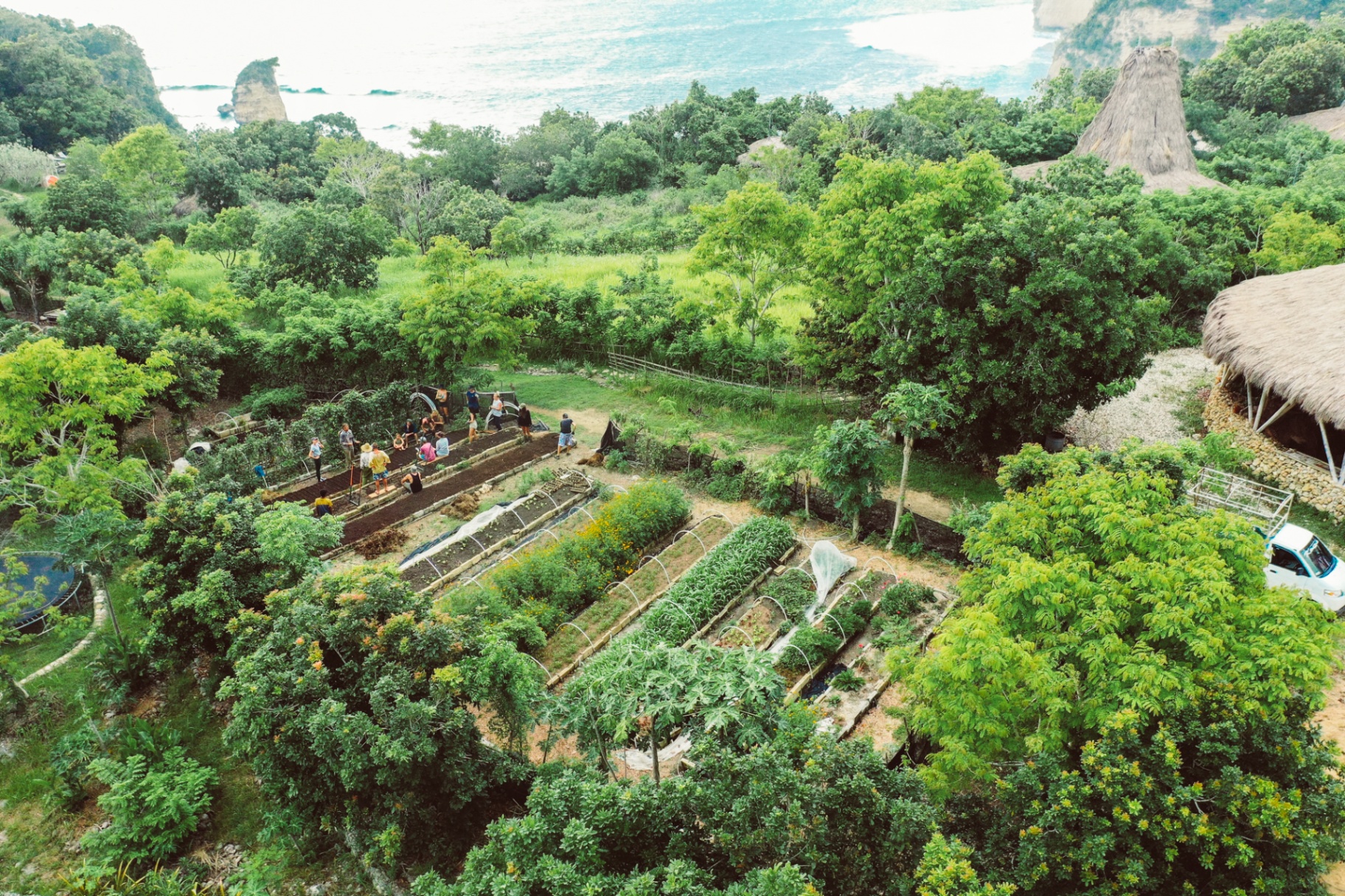
The retreat reports that 40% of its food comes from its own land, 40% from the local area and 20% from Bali, with none sourced internationally. Food scraps feed chickens and pigs, organic material is composted, and greywater irrigates the food forest. Dry composting toilets return decomposed material to the garden. Even old roof thatch moves through the animals and composting system before becoming fertilizer. Of 20,000 kg of annual waste reported, 18,000 kg was diverted from landfill — a 90% diversion rate.
The lessonConnect food growing, purchasing and waste handling so resources can circulate on site.
Pair solar power with seasonal water planning
Ngalung Kalla reports that 94% of its energy is produced through alternative sources, with solar power central to its low-impact approach. Refillable bathroom products replace guest-facing single-use items in rooms, and towels are changed weekly unless guests request otherwise. A rainwater reservoir was still under construction when the form was completed: it is intended to collect wet-season rainfall for the food forest during Sumba’s long dry season, reducing the pressure on groundwater.
The lessonCombine renewable energy with water planning that responds to the local climate; distinguish work in progress from completed outcomes.
Keep opportunity in the community
97% of staff are hired locally and the remaining 3% nationally. The retreat reports eight hours of staff training per month during high season, with more in low season, alongside daily coaching in cooking and permaculture gardening. It reports that 90% of its community dollar flow is distributed to the local economy, and $20,000 from revenue was invested in community projects. Support has included a village irrigation system, rebuilding a road linking a village to the sea and purchasing a generator for a remote village.
The lessonMeasure local hiring and local economic flows alongside practical investments chosen around community needs.

Let local people lead the experience
80% of guest activities are run by locals, including village visits, waterfall visits and hikes. At Asty weaving village, guests learn how plant-based colours and traditional techniques become textiles, then can buy directly from the village shop. An entrance fee is paid for each guest, helping sustain the weaving project. On-property permaculture tours, natural building courses and check-in conversations explain how the retreat’s systems work. Its own land and bay initiatives include planting trees along eroding edges and leaving trails unlit at night for wildlife.
The lessonPay local hosts for their expertise and connect guest learning to livelihoods and everyday stewardship.
Stay at Ngalung Kalla
Seven handcrafted bungalows on Sumba’s coast, where permaculture, island adventure and local hospitality meet.
View the hotel